
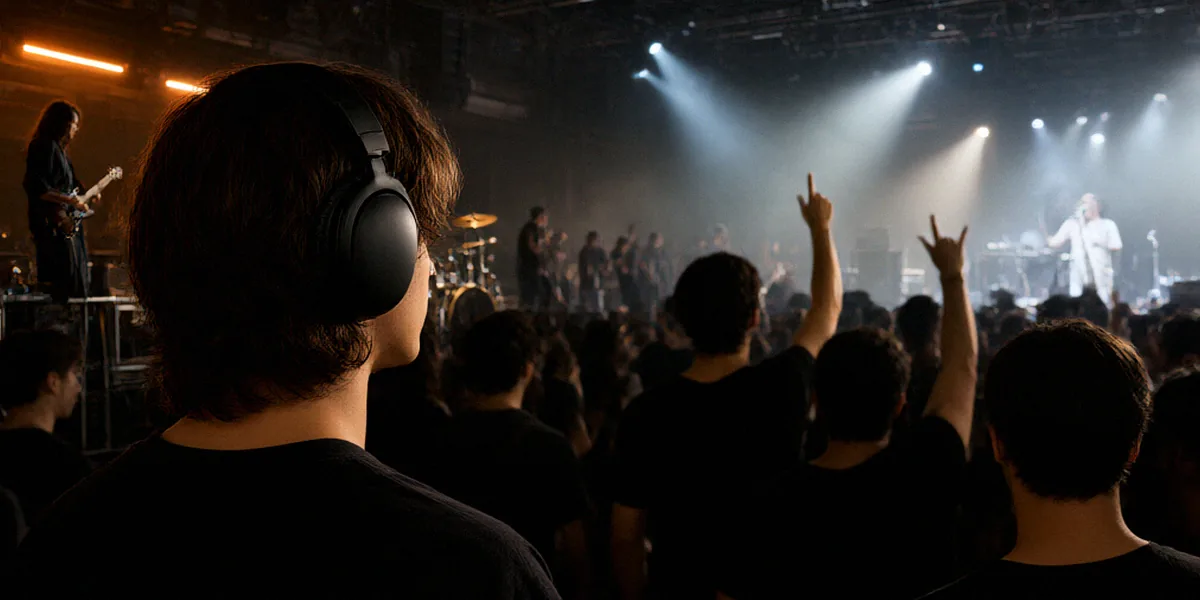
Loud and Safe: Protecting Your Hearing at Metal Gigs
The last time we caught a sludge-doom three-piece at a packed club in Toronto, the opening riff hit us somewhere in the sternum before it ever reached our ears. By the second song, our ears were ringing in that hollow, underwater way that tells you something has already happened. By the drive home, the ringing had settled into a steady tone that lasted until the next morning. That night was a blast — and a warning. Doom, stoner, and heavy metal are built on volume, but the damage that volume causes is cumulative, permanent, and entirely avoidable. This guide is our field-tested approach to protecting your hearing so you can keep going to shows for decades instead of a few loud years.
Why Hearing Protection Matters at Doom and Stoner Metal Shows
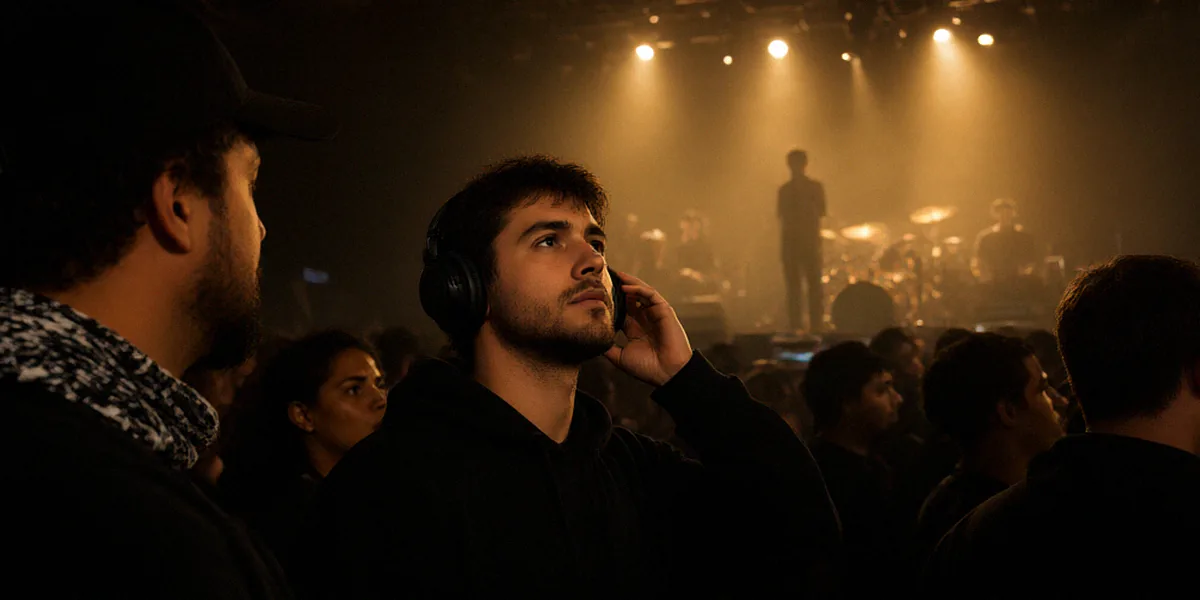
Live metal is loud by design, and doom is often the loudest corner of the genre. Sound pressure levels at a typical club show routinely sit between 100 and 110 dB, with peaks even higher near the stacks. For context, Canada’s occupational noise regulations treat 85 dB as the threshold at which employers must start protecting workers’ hearing over an eight-hour shift. A doom set blows past that threshold in seconds and stays there for two hours. Your ears don’t get an eight-hour shift to recover — they get the walk to the car.
The Science of Sound and Hearing Loss
Inside your ear, thousands of tiny hair cells in the cochlea convert vibrations into nerve signals. Loud sound flattens and eventually destroys those cells, and human ears cannot regrow them. That’s why the ringing after a show — temporary threshold shift, in audiology terms — is a genuine injury, not a badge of honour. Repeated exposure turns temporary ringing into permanent hearing loss, and it often arrives alongside tinnitus, a condition that follows many long-time concertgoers for life. The damage is painless in the moment, which is exactly what makes it so easy to ignore.
Doom Metal’s Unique Sonic Assault
Doom and stoner rock present a specific challenge. The genre leans on low-tuned guitars, fuzz, and sustained bass frequencies that carry enormous energy and travel through walls, floors, and bodies. Low frequencies are also harder to block than mid-range vocals, so cheap earplugs tend to muffle the cymbals and singing while letting the heaviest riffs pass straight through. Add long song lengths — ten, fifteen, twenty minutes of continuous pressure — and you get far more cumulative exposure than a two-minute punk blast. If you only protect your ears at one kind of show, make it this one.
Choosing the Right Earplugs for Heavy Metal Canada Gigs
The good news: hearing protection has come a long way from the orange foam cylinders of the past. The right pair preserves the character of the music while shaving off the dangerous decibels. Here’s how the main options compare.
Foam vs. High-Fidelity Earplugs
Foam plugs are cheap, widely available, and effective — they can cut 25 to 30 dB — but they tend to dull the high end and make everything sound like you’re underwater. High-fidelity plugs use a small acoustic filter that reduces volume more evenly across frequencies, so guitars still bite and vocals stay clear, just quieter. Brands like Etymotic, Alpine, and Decibulz all make musician-oriented models in the 15 to 25 dB range that are popular with metal fans. Many Toronto metal shows at venues like The Opera House and Lee’s Palace sell earplugs right at the merch table, so there’s no excuse for showing up empty-handed.
- Foam plugs: maximum protection, lowest cost, least musical clarity
- High-fidelity plugs: balanced attenuation, music stays intelligible, ideal for most gigs
- Custom-molded plugs: best fit and comfort, highest cost, made for regular concertgoers
Custom-Molded Options for Audiophiles
If you’re at shows most weekends, custom-molded plugs are worth the investment. An audiologist takes an impression of your ear canal, and the resulting silicone plugs seal perfectly, sit comfortably for hours, and can be fitted with interchangeable filters for different environments — a 15 dB filter for a club, a 25 dB filter for a festival main stage. They cost more upfront, but they outlast dozens of disposable pairs and deliver the most natural sound of any option. For anyone who treats doom and stoner rock as a lifestyle rather than a hobby, they pay for themselves.
Best Practices for Protecting Your Ears at Toronto Metal Shows
Gear is only half the equation. How you behave in the room matters just as much, and a few simple habits dramatically reduce your exposure.
Positioning Yourself in the Venue
Distance from the source is your cheapest form of protection. Sound intensity drops quickly as you move away from the PA and the backline, so standing ten metres back instead of pressed against the stage barricade can make a meaningful difference. Avoid parking yourself directly in front of a speaker stack or under a flown PA array, and be mindful of low-frequency build-up in corners and against back walls. At venues like The Opera House and Lee’s Palace, the sweet spot for both sound quality and ear safety is usually mid-room, slightly off-centre.
Taking Listening Breaks
Give your ears a rest during the night. Step into the lobby or the patio between bands, or even for a few songs during a long set, and let your ears recover. If you’re at a multi-band bill, use the changeover time as a built-in break rather than standing in the room while the PA plays filler music. Consistent use of earplugs — every set, not just the headliner — is the single most effective habit you can build. And if you ever notice ringing that lasts past the next morning, treat it as a signal to dial things back.
Hearing Health for Metal Fans: Beyond the Gig
Concerts get the attention, but most of our daily noise exposure happens elsewhere. Headphones at high volume, loud workplaces, power tools, and even city traffic all add to the total. Protecting your hearing is a year-round practice, not a show-night ritual.
Safe Listening at Home and On the Go
Follow the 60/60 rule: no more than 60 percent volume for no more than 60 minutes at a time. Noise-cancelling headphones are a genuine safety tool, because they let you hear detail at lower volumes by blocking background noise instead of forcing you to crank the music. When you’re listening to a doom record with long, dense passages, resist the urge to keep nudging the volume up as your ears fatigue. And if you use in-ear monitors or earbuds for hours a day, take them out regularly.
When to See an Audiologist
Book a baseline hearing test, then repeat it every year or two — especially if you go to shows regularly. Warning signs worth acting on include persistent tinnitus, muffled hearing after a show that doesn’t clear within a day, difficulty following conversation in noisy rooms, or a feeling of fullness in the ears. In Canada, the Canadian Hearing Society offers information, testing referrals, and support services across the country, and many provincial health plans cover at least part of an audiological assessment. Early action won’t reverse damage, but it prevents things from getting worse.
Advocating for Safer Shows in the Canadian Metal Scene
Hearing safety shouldn’t be the fan’s burden alone. Venues, promoters, and bands all have a role, and the Canadian scene is slowly catching on. We’d like to see it move faster.
Pushing Venues to Provide Earplugs
Ask at the bar or merch table whether earplugs are available — and if they aren’t, say so politely to the venue and on social media. Demand works. Some Canadian metal festivals now hand out free earplugs at the gate or sell them alongside branded merch, and venues that stock them at the bar see fans actually use them. Organisations like the Hearing Health Foundation publish resources and awareness campaigns that are useful when making the case to a promoter. A small box of plugs behind the bar costs a venue almost nothing and protects its audience for years.
Artists Leading by Example
When a touring band mentions earplugs from the stage, or posts about hearing health between dates, it lands differently than a public health notice. Several heavy acts now sell branded high-fidelity plugs as merch and talk openly about their own audiologist visits. We’d love to see more Canadian doom and stoner bands follow suit — a thirty-second shout-out before the encore can change how a whole room thinks about volume. Fans can help by thanking artists who do it and asking others to start.
Protecting your hearing isn’t about turning the music down. It’s about making sure you can still hear it — clearly, fully, and for the next thirty years. Bring plugs, stand smart, take breaks, and get your ears checked. Doom metal rewards patience, and so do your ears.
FAQ
Do earplugs ruin the sound at a metal show?
Cheap foam plugs do muffle the high end, but high-fidelity plugs from brands like Etymotic, Alpine, and Decibulz are designed to lower volume evenly across frequencies. Most fans find the music actually sounds clearer with them in, because distortion and crowd noise are reduced.
How loud are Toronto metal shows, really?
Club shows at venues like The Opera House and Lee’s Palace commonly run between 100 and 110 dB, with peaks higher near the stage. Canada’s occupational noise regulations flag 85 dB as the threshold for mandatory worker protection, so a two-hour set is well beyond safe exposure without protection.
Where can I buy earplugs at a show?
Many Toronto metal shows sell earplugs at the merch table, and some venues stock them at the bar. It’s worth carrying your own pair in your jacket or gig bag so you’re never caught without them.
Can hearing loss from concerts be reversed?
No. The hair cells in the inner ear don’t regenerate, so noise-induced hearing loss and tinnitus are permanent. That’s why prevention — earplugs, positioning, breaks, and regular hearing tests — matters so much.
How often should I get my hearing tested?
Get a baseline test, then repeat every one to two years if you attend shows regularly or work in loud environments. The Canadian Hearing Society can point you toward testing and support services across Canada.