
How to Start an Internet Radio Show: A Doom Metal Guide for Canadians
It usually starts the same way: it’s 2 a.m., you’re deep into a playlist of Earth, Yob, and Pallbearer, and somewhere between the third and fourth track you think, “I need to share this crush with people who actually get it.” That impulse is the seed of every great heavy metal radio show. The good news is that turning that late-night obsession into a real internet radio broadcast is more achievable than ever — especially if you’re Canadian, because our country has both a thriving doom scene and a licensing framework that independent broadcasters can actually navigate. In this guide, we’ll walk through everything we’ve learned about launching a doom metal internet radio show, from defining your niche to keeping a consistent broadcast schedule.
Define Your Niche and Audience

“Doom metal” is a big tent. If you try to play everything from Saint Vitus to Bell Witch in the same hour without a plan, your show will feel shapeless. The strongest internet radio shows pick a lane and own it. Narrowing your focus also makes promotion easier, because listeners know exactly what they’re tuning in for.
Choosing Between Doom Metal Subgenres
Traditional doom, stoner doom, sludge, death-doom, funeral doom, and doom rock all attract overlapping but distinct audiences. A show built around sludge — think Grief, Thou, and Primitive Man — has a very different texture than one built around funeral doom’s glacial pacing. We recommend picking one primary subgenre and one adjacent one to keep things fresh. If you’re Canadian, leaning into regional identity is a smart differentiator. A show called “Northern Crush” that highlights Canadian doom bands will find an audience faster than a generic metal program.
Understanding Canadian Copyright and SOCAN
Here’s the part most new broadcasters ignore until they get a takedown notice. In Canada, SOCAN (Society of Composers, Authors and Music Publishers of Canada) licenses music for Canadian internet radio. If you’re broadcasting to Canadian listeners, you generally need a SOCAN license or a streaming host that handles it on your behalf. This is also why targeting Canadian listeners matters for community building: your licensing, your promotional channels, and your local scene connections all align. Ignoring SOCAN isn’t a shortcut — it’s a liability.
Gather Your Equipment and Software
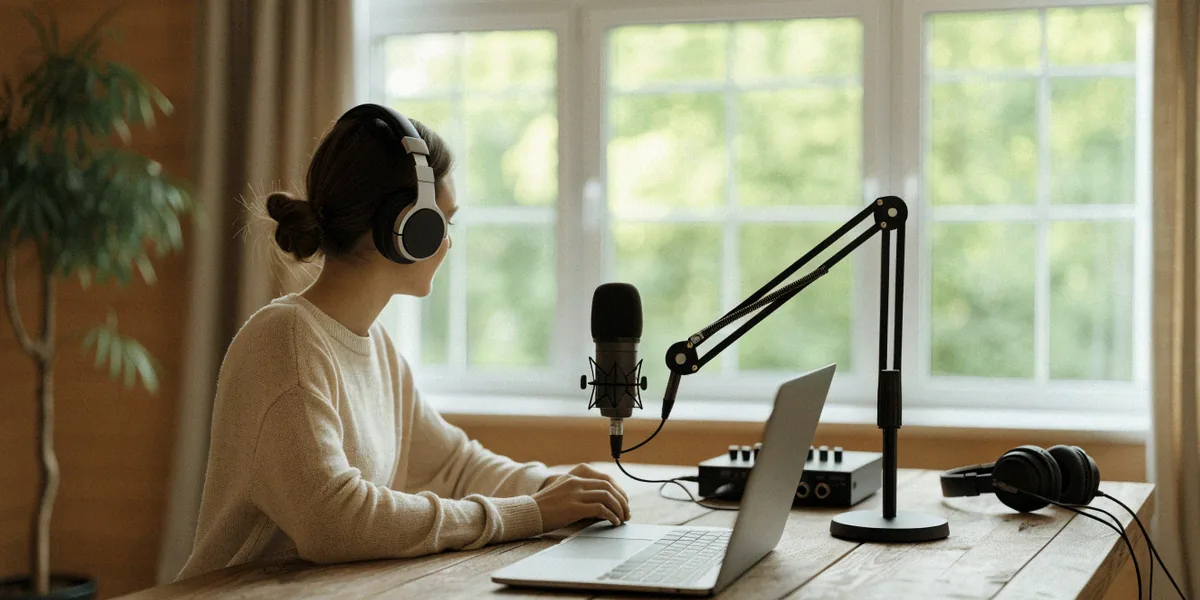
You don’t need a professional studio. You need a clean signal chain and software that doesn’t fight you. Most successful doom metal internet radio shows run on modest setups that cost less than a decent tube amp.
Microphones, Mixers, and Audio Interfaces
The Shure SM7B is a popular dynamic microphone for broadcasters, and for good reason: it rejects room noise, handles low-end rumble well, and makes voices sound authoritative. Pair it with a Focusrite Scarlett interface (the 2i2 is the standard starting point) and you have a broadcast-grade front end. If you want to take calls or interview guests, add a small mixer like the Behringer Xenyx series. Headphones matter too — closed-back models prevent bleed and let you hear what listeners actually hear.
Broadcast Software and Streaming Hosts
For recording and editing, Audacity is free and perfectly capable. For live broadcasting, RadioDJ and SAM Broadcaster are the two automation tools most independent metal radio hosts rely on. RadioDJ is free and Windows-only; SAM Broadcaster is paid but more polished. Both let you schedule playlists, insert voice breaks, and stream to a Shoutcast or Icecast server.
Choose a Streaming Platform and Host
Your streaming host is the backbone of your station. It determines your uptime, your listener capacity, and whether you’re legally covered.
Free vs. Paid Streaming Services
Free options like running your own Shoutcast server work, but you’re responsible for bandwidth, uptime, and licensing. Paid services like Live365 and Radio.co handle the technical infrastructure and often bundle licensing. For a doom metal show that might only broadcast a few hours a week, Radio.co’s entry tier is usually the better value. For 24/7 automated stations, Live365’s package deals tend to win.
Licensing and Royalty Payments in Canada
If you’re using a host that handles SOCAN and Re:Sound payments, you’re largely covered. If you’re self-hosting, you’ll need to secure those licenses directly. This is non-negotiable if you want your heavy metal radio show to survive long-term. We’ve seen too many promising stations vanish because the host ignored royalty obligations.
Plan Your First Episode and Metal Playlists
Your first episode sets the tone. Don’t try to cover the entire history of doom in 60 minutes. Pick a theme, build a tight playlist, and rehearse your transitions.
Structuring Segments and Transitions
A solid hour looks like this:
- 0:00–0:05 — Intro track and welcome
- 0:05–0:20 — First block: three tracks around a theme
- 0:20–0:25 — Voice break, background on the bands
- 0:25–0:45 — Second block: deeper cuts and a guest pick
- 0:45–0:55 — Third block: new releases or a spotlight
- 0:55–1:00 — Outro and teaser for next week
Curating Doom Metal and Heavy Metal Radio Playlists
Flow matters more than hits. Open with something slow and crushing, then vary tempo and texture. A “Canadian Doom Legends” episode could open with Woods of Ypres — the Ontario band whose blend of blackened doom and gothic melancholy still defines northern heaviness — then shift into Blood Ceremony, the Toronto doom rock outfit whose flute-driven riffs sound like nothing else in the genre. Build metal playlists that feel like a journey, not a shuffle.
Promote Your Show and Build a Community
You can have the best doom metal internet radio show in the country and still have zero listeners if nobody knows it exists. Promotion is half the work.
Social Media and Podcast Directories
Post episode clips on Instagram and TikTok — 30-second riffs with a caption about the band work surprisingly well. Submit your show to podcast directories like Spotify and Apple Podcasts if you archive episodes. Reddit’s r/doommetal is one of the most welcoming metal communities online, but read the rules before posting; self-promotion is allowed in specific threads.
Networking with Canadian Metal Scenes
Local Canadian metal forums, Facebook groups, and Discord servers are goldmines. Reach out to other internet radio shows for cross-promotion — a shoutout swap costs nothing and expands both audiences. If you can get a local record store or venue to share your show, even better.
Avoid Common Pitfalls and Stay Consistent
Most shows die in month three, not month one. The reasons are almost always the same.
Technical Mistakes to Avoid
Poor audio quality kills credibility faster than anything else. Loudness normalization is crucial for consistent audio levels in internet radio — without it, your voice breaks will blast listeners while your music whispers. Use a loudness meter and target around -16 LUFS for streaming. Also avoid clipping, background hum, and inconsistent mic distance.
Maintaining a Broadcast Schedule
Pick a time slot you can actually commit to. Weekly is better than “whenever I feel like it.” Announce your schedule, stick to it, and communicate in advance if you need to skip a week. Consistency is what turns casual listeners into regulars.
FAQ
Do I need a SOCAN license to run a Canadian internet radio show?
Yes, if you’re broadcasting music to Canadian listeners and not using a host that covers licensing for you. SOCAN licenses music for Canadian internet radio, and most reputable streaming hosts bundle SOCAN and Re:Sound payments into their plans.
What’s the best microphone for a doom metal radio show?
The Shure SM7B is the industry standard for broadcasters because it handles low-end rumble and rejects room noise. Pair it with a Focusrite Scarlett interface for a clean signal chain.
Can I play Canadian doom bands like Woods of Ypres and Blood Ceremony on my show?
Absolutely — and you should. Woods of Ypres was a Canadian doom metal band from Ontario, and Blood Ceremony is a Canadian doom rock band from Toronto. Featuring them builds your local credibility and gives your show a distinct identity.
How important is Loudness normalization for internet radio?
Extremely. Loudness normalization is crucial for consistent audio levels in internet radio. Without it, transitions between music and voice will sound jarring, and listeners will turn off. Target around -16 LUFS and meter every episode.
How often should I broadcast my heavy metal radio show?
Weekly is the sweet spot for most independent shows. It’s frequent enough to build habit and rare enough to stay sustainable. Whatever you choose, announce it and stick to it.
Starting an internet radio show is a marathon, not a sprint. The Canadian doom metal community is small but fiercely loyal, and it will embrace your authentic voice if you show up consistently, respect the music, and put in the work. Fire up the SM7B, load your playlist, and hit broadcast — the crush is waiting.